

 EN
EN
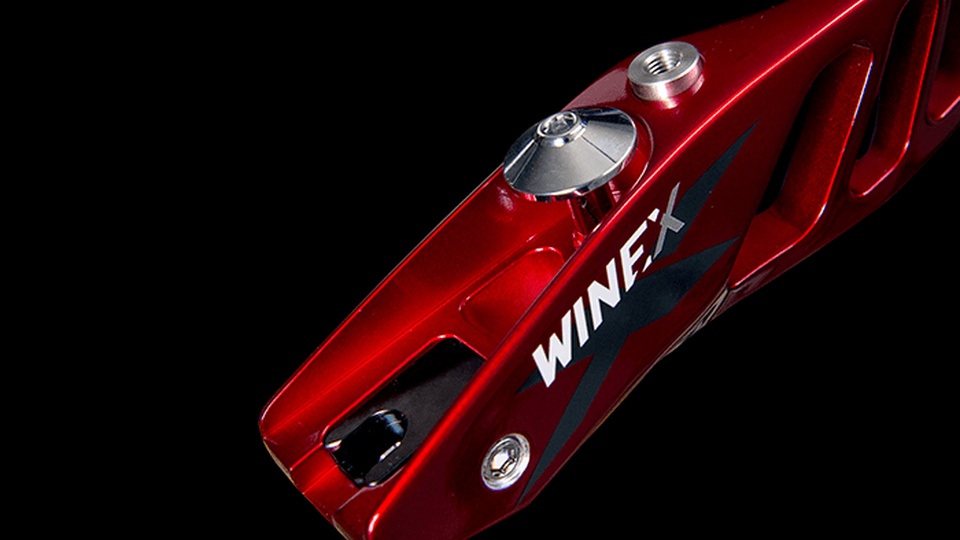
Tiller in archery is one of those small adjustments that can completely transform the feel of the bow. When properly set, it helps the limbs work in balance, improves stability while aiming and reduces vibration. When poorly adjusted, it can make the sight rise or drop during the draw, make the bow feel uncomfortable or cause the grouping to lose consistency.
Summary
Tiller in archery is the difference in power or position between the upper and lower limb of a bow. Defined as the measurable distance from the joint of each limb with the grip to the string, the upper tiller corresponds to the measurement on the upper limb and the lower tiller to that of the lower limb.
Tiller adjustment seeks to balance the force of both limbs when drawing the bow, which allows for more stable and comfortable aiming. In Olympic recurve bows, a positive tiller is common, meaning the lower limb is slightly more powerful, with shorter string distances in the lower part, in the range of 3–6 mm. In modern compound bows, however, the limbs are manufactured symmetrically and are usually adjusted with zero tiller, meaning equal distances.
To measure it, an archery square, also called a bow square, or a ruler is used with the bow correctly strung. The upper and lower distances are measured and the difference is calculated. A poorly adjusted tiller, whether too high or too low, causes the bow to tend to tilt upwards or downwards when drawn, generating vibrations and making it difficult to keep the sight stable.
This article reviews in detail the definition and biomechanics of tiller, its step-by-step measurement, the effects of different adjustments on stability and accuracy, recommended values for recurve and compound bows, its relationship with other parameters such as brace height, nocking point and fletching, practical adjustment and diagnostic examples, as well as maintenance and associated risks.
Definition and fundamentals of tiller
The tiller of a bow is defined as the physical difference in power between the upper and lower limbs, or equivalently the difference in the distances from the body of the bow to the string when the bow is at rest. In practical terms, two values are measured: the upper tiller, which is the string–upper limb distance at the point where it joins the riser, and the lower tiller, which is the string–lower limb distance.
Because the hand that draws the string is positioned above the geometric centre of the bow, when drawing the bow the upper limb travels slightly more and becomes “stronger”. To compensate for this, the lower limb is usually made somewhat more powerful, which translates into a shorter distance to the string. Tiller is the difference between both distances.
It is usually measured with an archery square, or bow square, placed at 90° at the base of each limb. Technically, a bow with a well-adjusted tiller dynamically balances the forces of both limbs when reaching full draw, so that the sight does not tend to rise or fall during the draw.
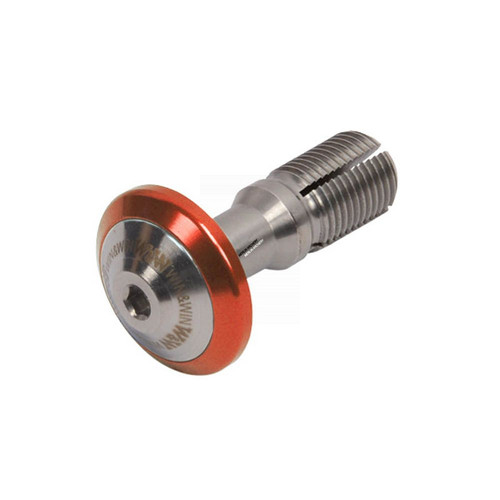
Tiller adjustment varies according to the archer’s morphology and the geometry of the bow. That is why it is important to personalise it. The correct tiller allows the archer to aim better and more comfortably when drawing and releasing. If the tiller is not adjusted, an imbalance will be felt when drawing the bow: the sight, or collimator, will tend to move vertically instead of remaining fixed on the target.
By contrast, with the correct tiller the limbs provide dynamic balance and greater firmness, reducing vibration and making it easier to get through the clicker. In short, a good tiller adjustment reduces unbalancing forces on the archer’s body, vertical torques, and improves shot stability and repeatability.
Tools and procedure for measuring tiller
To measure tiller, you basically need an archery square or rigid ruler and the bow strung, with the brace height recommended by the manufacturer. The typical procedure is as follows:
- Preparation: assemble the bow without drawing it and secure it vertically. It is recommended to use a bow stand or brace it with a stability box to keep it steady. First adjust the brace height according to the specification. It does not usually directly affect tiller, but it should be set beforehand.
- Upper measurement: with the bow at rest, place the square at the base of the upper limb, where it joins the riser, so that it measures the distance perpendicularly from that point to the string. Record that value as the upper tiller.
- Lower measurement: repeat the same process with the lower limb, measuring from its base to the string level. Record that value as the lower tiller.
- Calculate the difference: tiller is obtained by subtracting the lower measurement from the upper measurement. A positive value indicates that the lower limb is closer to the string, that is, it is more powerful than the upper limb. For example, a tiller of +5 mm means that the lower limb has 5 mm less distance to the string.
- Interpret: if the difference is 0, it is called even tiller, due to force symmetry. If it is greater than 0, it is positive tiller, with a stronger lower limb. If it is less than 0, it is negative tiller, with a stronger upper limb, which is uncommon in recurves.
In addition to the square, it is useful to mark the initial positions of the adjustment bolts with tape or correction fluid so that you can return to the starting configuration. Many archery shops recommend checking tiller every time a new bow is assembled or the string is changed, since small movements of the ILF bolts can alter these values.
Effects of tiller adjustments: stability, accuracy and safety
Adjusting tiller has a direct impact on bow stability during the draw. An improperly adjusted tiller will make the bow tend to tilt; this is usually noticed when the sight rises or drops during the draw instead of remaining fixed.
With low tiller, meaning the lower limb is not powerful enough, when drawing the upper limb gains force sooner and the bow will tend to lift the sight. If the sight drops when drawing, it is a sign of too little power in the upper limb, the opposite pattern. When tiller is properly calibrated, the vertical forces are compensated: the sight remains level and the archer does not fight against an involuntary vertical movement.
This translates into steadier shots and tighter groups, since the archer can keep the sight stable in the centre of the target with less effort.
In terms of accuracy, an appropriate tiller prevents inconsistent shifts in the point of impact. For example, if the tiller is too large, with the lower limb too strong, it is common for the sight to “want to stay low” when reaching full draw, making it difficult to “lift it” to the centre of the target. Conversely, a very small tiller causes the opposite.
Adjusting until the sight is stable during the aiming sequence improves final accuracy. A practical indicator is post-shot vibration: a bow with unbalanced tiller vibrates more, because one limb continues moving after the shot while the other has already stopped. By balancing the tiller, those vibrations usually disappear, producing a smoother shot.
Regarding safety and durability, it is important not to exceed the adjustment limits. Each manufacturer gives a safe adjustment range for the tiller bolts. Exceeding it too much, for example tightening a bolt beyond what is recommended, can overload a limb or damage threads, which may cause structural failures.
Although there is no universal generic value, many bracers suggest not going beyond 2–3 turns from factory settings and always balancing the bolts symmetrically to avoid forcing a single limb. Do not correct tiller by unusual means, such as placing irregular supports, and always work with the bow unloaded, not drawn, when adjusting bolts.
Recommended values and tolerances
The ideal tiller depends on the type of bow. For competition recurve bows, especially Olympic recurve, a slightly positive tiller is usually recommended: typically 3 to 6 mm, that is, the lower limb 3–6 mm closer to the string than the upper limb. This range, equivalent to about 1/8″–1/4″, compensates for the natural travel difference caused by the grip position.
In practice, many archers set tiller at around +5 mm and then fine-tune it according to their feel and individual technique. On the other hand, modern compound bows usually shoot better with even tiller, 0 mm, since their four limbs are manufactured as a set with almost identical flex.
As a reference, the following table summarises the general guidelines:
| Bow | Recommended tiller |
|---|---|
| Olympic recurve competition bow | +3–6 mm. Positive tiller: lower limb closer to the string. |
| Recreational recurve | Similar to competition: 3–6 mm, non-strict value. |
| Compound | 0 mm. Even tiller, symmetry. |
“+x mm” indicates that the lower limb is positioned x mm closer to the string than the upper limb. Modern compound bows, due to their symmetrical manufacturing, are normally adjusted with even tiller on both sides. If a manufacturer specifies other values, the specific guide for that model should always prevail.
Adjustment tolerances are small: variations of more than a few millimetres can be noticed immediately. It is recommended to adjust in very small steps, half a bolt turn or less, and keep each bolt within about ±2 mm of an initial reference. In many cases, it is enough to set it around 3–5 mm and then, through shooting tests, fine-tune it within a couple of millimetres to achieve the desired stability.
Recurve vs. compound
In recurve bows, it is common to apply positive tiller, as indicated above. By contrast, current compound bows, also known as “cam bows”, integrate identical and digitally calibrated limbs, so they are typically adjusted so that the string-limb distance is the same at the top and bottom.
Thus, for compounds the desired tolerance is basically zero: any vertical difference is considered a sign of secondary misadjustment that is corrected with nock point or cam angles. Most compound bows shoot best with even tiller, meaning the distance from the string to the limb is equal at the top and bottom, while most recurves need positive tiller, with the lower distance 3–6 mm shorter than the upper one.
This difference explains why, in a compound, turning one tiller bolt without matching the other shifts the nocking point without creating a critical pressure imbalance, although it can change the optimal release point. In a recurve, however, each bolt adjustment has much more influence on the balance of forces.
For this reason, in compound bows the bolts are normally pre-set uniformly and only fine-touched to, for example, change the position of the nocking point or make a very slight adjustment to the delivery. In recurves, common practice is first to set the “standard” tiller, using the tables, for example +5 mm, and then shoot to fine-tune.
Interaction with brace height, nocking point and fletching
Tiller is part of a set of interdependent adjustments. Before measuring tiller, it is advisable to set the brace height to the recommended value, since changing the string tension would modify its resting position and alter the measurements. Once the brace height has been set, by twisting the string or replacing it, tiller is then measured with that configuration.
The nocking point is also affected when changing tiller. Adjusting the bolts asymmetrically slightly shifts the nocking point relative to the grip. For example, if the upper bolt is loosened, increasing its distance, the nocking point drops, and vice versa.
In practice this means that part of the nock point adjustment, usually done with the nocking tool, can also be achieved by adjusting tiller, provided it is done symmetrically on both bolts so as not to destabilise the balance. An arrow that consistently impacts low will indicate a high nock, which could be “corrected” with a slight increase in tiller, turning the upper bolt in the opposite direction, or simply moving the nocking point down.
The feathers or vanes, fletching, generally do not require direct adjustment because of tiller. However, any change in the nocking point affects the flight of the arrow, which in turn may show whether the tiller is incorrect. For example, if after adjusting tiller the arrows still tear high or low in a paper test, it may be necessary to readjust the nocking point before fine-tuning the tiller again.
In short, when adjusting tiller it is then advisable to review the nocking point and make sure the fletching is centred to achieve straight flight.
Practical examples and checklist
The following are practical indicators for diagnosing and adjusting tiller:
- Sight path during the draw: place the bow aiming at the centre of the target without drawing it, then draw it slowly, bringing the hand towards the anchor. Observe the path of the sight. If the sight drops during the draw, it indicates that the lower limb is too strong, or that the tiller is too low, and the tiller must be increased, for example by tightening the lower bolt or loosening the upper one. If the sight rises, the upper limb is excessively strong, or the tiller is high, and the tiller must be decreased. When the sight remains practically level, the tiller is close to optimal.
- Vibration on release: after provisionally adjusting the tiller, shoot a few arrows. A sign of misadjustment is that the bow vibrates strongly, as if one limb were still moving after the shot. If you feel vibration in the centre of the riser or the clicker sound is unstable, fine-tuning the tiller usually eliminates those symptoms.
- Impact pattern: observe where the arrows repeatedly impact. If the impacts are consistently in the upper part of the group, it could indicate that the nocking point has remained high, possibly due to incorrect tiller adjustment. If they are low, the opposite. Adjusting the nocking point and then reassessing the tiller can solve this problem.
- Cross-checking: after each change, measure the tiller values again. If after a few arrows the value changes, for example if the bow has warmed up or the string has stretched slightly, adjust again. It is also useful to check tiller with the bow strung and unloaded to see the difference in string tension.
- ILF equipment: on bows with the ILF system, upper limb bolts, remember to first loosen the locking screws, or internal limiters, before turning the tiller bolts. This prevents thread damage.
These quick checks help detect tiller problems. If balance problems persist after all adjustments, it is advisable to check limb alignment, making sure they are level, and the symmetry of the grip, since defects in these can simulate an incorrect tiller.
Tiller adjustment flowchart
The following flowchart schematically summarises the basic process of measuring and adjusting tiller, indicating when to iterate measurement and adjustment until the desired values are reached:
flowchart TB
    A([Start: bow assembled]) --> B(Measure upper and lower tiller)
    B --> C{Values according to recommendation?}
    C -- Yes --> D[Final checks: other adjustments (brace height, nocking point, etc.)]
    C -- No --> E[Adjust tiller bolts<br/>(tighten or loosen as needed)]
    E --> B
Maintenance and periodic checks
Tiller should be checked every time the bow is assembled, after replacing the string or changing the limbs. In fact, adjustment manuals usually indicate that tiller is the second adjustment to check, just after confirming that the limbs are aligned.
Between intense shooting sessions, it is good practice to unload the bow and visually check the limbs, bolts and that there is no play in the system. There is no established “official” frequency for recalibrating tiller, but most archers check it at least at the beginning of each new season or championship, and whenever any change in the bow’s behaviour is perceived.
If the bow is stored assembled for a long time, it is advisable to unstring it and measure the tiller again when stringing it once more, since the string can stretch and alter the initial tension. In short, a reasonable plan is to check tiller at every equipment change and before important competitions.
Practical conclusions
- Essential balance: correct tiller balances the forces of the limbs when drawing. It makes stable aiming easier and reduces unwanted vibrations.
- Typical values: in Olympic recurves, approximately 3–6 mm of difference is usually sought, with the lower limb closer. In modern compounds, normal tiller is zero, symmetrical. Exact values may vary slightly depending on the archer and bow model.
- Measure carefully: always use an archery square or precise ruler, and measure with the bow strung in a standard shooting position. Make sure to tighten or loosen the bolts with the bow unloaded.
- Gradual adjustments: make small adjustments, half a bolt turn at a time, and check each time. If after adjusting the bow vibrates less and the sight remains stable, the tiller is close to optimal.
- Cross-checking: check the path of the sight when drawing, whether it rises or drops, and examine the arrow grouping. These clues will help decide whether to increase or reduce tiller.
- Do not exceed limits: respect the safety limits indicated by the manufacturer, especially the maximum bolt distance, to avoid damaging the limbs. Any extreme adjustment must be justified by a real improvement in the shot.
- Interaction with other adjustments: always keep brace height and nocking point within correct ranges when adjusting tiller. The correct tiller together with the correct nock set makes the arrow fly cleanly and accurately.
In short, tiller is a key technical parameter in recurves and compounds. With the right information, precise measurements and good adjustment practices, any archer can optimise it for their own shooting style.
References
- Archery manuals and technical guides, including Archery Focus and technical documentation on tiller adjustment.
- Manufacturer guides and specialised resources on recurve and compound bow setup.
- Resources from federations, specialised archery shops and experts in bow tuning.