

 EN
EN
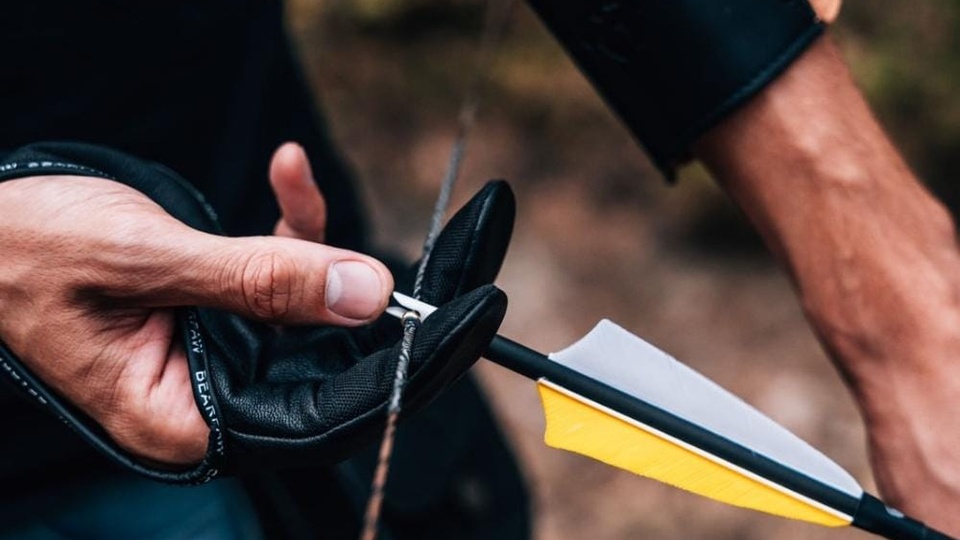
Barebow · Barebow archery · Tuning
Nocking Point in Barebow: Technical Guide
A technical and practical guide to the nocking point in Barebow: what it is, how to place it, how to adjust it step by step, which mistakes to avoid, and how it affects arrow flight, accuracy, and consistency.
Executive Summary
The nocking point is the place on the string where the arrow nock is positioned. Its function is to keep the arrow in an identical position every time the bow is drawn, ensuring that it leaves the bow in the same way on every shot. In Barebow archery, its adjustment is especially important, as this style does not use sights or stabilisers and depends on clean arrow flight. In general, bows with arrow rests, such as Olympic recurve bows, use relatively low nocking points, approximately 90–110° in relation to the bow axis, while barebows, where the bow has a window and the arrows rest on a shelf, require higher nocking points, above 110°. This article reviews in detail the types of nocking points — metal, thread, rings, adhesives — their materials, placement methods, step-by-step adjustment, and how they affect arrow accuracy and trajectory. It also analyses interactions with arrow characteristics, such as nock fit on the string, spine, FOC, feathers/vanes, and arrow rests, as well as common problems and solutions. Practical recommendations are included for competition and training, periodic maintenance, and the regulatory framework, including WA/RFETA. The final pages include a printable checklist to guide nocking point adjustment and maintenance.
What is the nocking point and what is it for?
The nocking point is “the place on the string where we position the arrow nock in order to shoot.” In other words, it is made up of two small markers, nocks or nocking locators, that delimit exactly where the arrow will be placed on the string. This measurement fixes the vertical height of the nock in relation to the rest and the imaginary aiming line. Its main function is to ensure that the arrow always leaves from the same position on the string, with the same tension and force, which favours flight consistency. World Archery highlights that the nocking point “keeps an arrow in place on the string, ensuring that it leaves from a consistent position and with consistent force.”
A correctly placed nocking point prevents the arrow from sliding up or down at critical moments during the release. In addition, by anchoring the nock, it prevents the arrow from striking the arrow rest or the bow window excessively. If it is badly positioned, the feather or the arrow may rub against the bow, causing rebounds or undesirable trajectories. Thus, a nocking point that is too low can cause the feather to touch the arrow rest and bounce, altering the flight, while one that is too high will make the arrow leave at a downward angle, with a pronounced drop, and may even strike the inside of the window. For this reason, every archer must fine-tune it until the arrow “leaves the bow as cleanly as possible.”
Differences in Barebow vs Olympic Recurve and Compound
In Barebow, a recurve bow without sight or stabiliser, the requirements of the nocking point differ from those of Olympic recurve or compound bows. Since there are no stabilisers or clicker, the Barebow is more unstable at release, so every arrow and every adjustment has a greater influence on flight. In addition, barebows often shoot using the shelf, or “window”, as support, so the arrow needs greater height in order to leave the bow cleanly. In practical terms, it is recommended to place the nocking point above 110°, the angle of the arrow with the string, on bows without arrow rests. By contrast, on bows with arrow rests, such as Olympic recurve bows with adjustable rests, it is common for the nocking point to be between 90° and 110°, since the arrow rest prevents rebounds. The following figure illustrates these general ranges:
The compound bow, by contrast, uses pulley mechanisms and moving arrow rests, which changes the dynamics: compound arrows tend to leave the bow flatter and with a fixed arrow support, or rest. Its nocking point is usually adjusted for centreshot, meaning arrow-string centre alignment, and the frequency of adjustment is lower. In practice, Barebow and recurve have similar calibration processes, but Barebow requires more attention to vertical position because it does not rely on external aids.
According to federation rules, WA/RFETA, Barebow does allow one or two nocking points on the string, known as nock locators. However, any string element that helps with aiming, such as mouth/nose buttons or visual marks, is prohibited. Illuminated or electronic nocks are also not allowed. In addition, stabilisers are completely prohibited in Barebow, so the archer must compensate for balance with short weights on the riser. In any case, competition Barebows must pass the ring test, 12.2 cm, without the string, which requires the nocking point to be positioned so that the arrow is as aerodynamic as possible during release.
Types of nocking points and materials
There are several methods for fixing the nocking point on the string. The most common are:
- Metal nocking point, fixed clip: A small metal clip with an inner rubber coating that is tightened onto the string with special pliers.
- Thread nocking point, movable: A thread, such as dental floss, serving thread, fine nylon, etc., is tied manually around the string to form a stop. Sometimes it is reinforced with glue or waxed thread is used.
- Elastic ring, nock ring: A rubber or plastic ring that is glued, using special string adhesive, or placed over the centre serving to act as a limit for the nock.
- Point with glue/fixed serving: Some techniques use epoxy or bow glue to insert a rigid stop on the string, or apply some “extra serving”, braided serving, reinforced with glue.
Below is a comparative table of these methods:
| Type of nocking point | Material/Procedure | Advantages | Disadvantages |
|---|---|---|---|
| Metal, clip | Metal clip with inner rubber, fixed with pliers. | Quick installation and easy to move. Good initial firmness. |
May slide if not properly tightened. Risk of being launched during release. Requires a tool, pliers. |
| Thread, movable | Thread, dental floss, serving thread, nylon, tied on the string. | Does not fly off; very safe once properly made. Light and cheap. |
Requires practice to tie the knot well. If it moves, it must be cut and remade. Slower to change. |
| Elastic ring | Rubber/plastic O-ring glued or placed over thread. | Resistant; absorbs impacts. Simple installation, glued with specific adhesive. |
Little mobility: the position remains fixed. Requires glue; difficult to remove to change position. Rubber may deteriorate with use. |
| Serving + glue | Extra serving thread reinforced with epoxy or glue. | Very firm; practical for permanent adjustments. Protects the string. |
Very difficult to move: the thread must be cut and redone. If applied badly, it may harden the string. |
The advantages and disadvantages are based on archers’ experience: for example, metal nocking points allow quick changes, useful at low draw weights, but can come loose on powerful bows. Thread nocking points, by contrast, “are very reliable” if tied correctly and do not risk flying off, although they are not practical for frequent adjustments. Rubber rings are popular in traditional archery, for example fixed brass rings, but in barebow rubber ones are often used because of their flexibility. In any case, the quality of the material, including strength and weight, affects the shot: a heavy metal nocking point adds mass, and very elastic thread could give way. It is recommended to use products from recognised brands and replace components that are very worn or deformed.
Placement and step-by-step adjustment in Barebow
To position the nocking point correctly on a barebow, the following general steps are followed:
- Prepare bow and arrows: Check that the string is in good condition and that the arrows are identical, in length, weight, and nock, as required by the regulations. Set up the bow at the desired draw weight, according to WA Barebow rules, and place the arrow rest horizontally or slightly upward to clearly define the support triangle.
- Necessary tools:
- Archer’s T-square, a calibrated ruler with clips, to measure height.
- Nocking point pliers, if you are using metal clips.
- Thread, dental floss, fine nylon for thread nocking points. Bow glue/epoxy, optional. Lighter or flame, to burn thread ends. Cutter/scissors.
- Shooting machine or bow stand, which makes adjustments easier.
- Measure the initial position: Place the T-square on the bow string, resting it on the arrow rest. At the centre of the square’s base, the “zero” point, the arrow is considered horizontal to the string. A good initial reference is to mark 5 mm above that level for the upper nocking point, about 3/16". This is a starting point; it can be fine-tuned later.
- Mark and fix the upper nocking point: On the initial mark, fix a provisional nocking point. If it is metal, use the pliers; if it is thread, tie it with at least three solid wraps, burning the ends to seal it. Make sure to leave a few millimetres of separation between the two nocking points, above and below, so that the arrow can float. World Archery advises “leaving enough space for the arrow to move a little; otherwise the two points can pinch the arrow on the string.” In Barebow, two nocking points are typically used, one above and one below the nock. If only one is used, an option allowed by the rules, it is better to place it in the upper position, because when drawing the string the arrow tends to rise.
- Test shot – initial grouping: Place normal fletched arrows. Shoot a series of arrows, initially at around 10–15 m, observing the grouping. Evaluate whether the arrow impacts high/low on the target or whether there is any reaction on the arrow rest. If available, also use the paper test: shoot through a sheet of paper, or thin fabric, stretched in front of the target. The resulting hole will indicate whether the arrow left vertically centred or not. In general:
- If the hole appears high, the arrow is striking high, it is a sign of a low nocking point.
- If it appears low, the nocking point is too high.
- Bare shaft test: Optionally, remove the feathers/vanes from an arrow and shoot it bare. The impact position compared with the fletched arrow helps assess spine and rest centring. According to some texts, the “bare shaft” can reveal vertical oscillations caused by a poor nocking point.
- Fine adjustment: Based on the results, adjust the nocking point position in millimetres. For example, if the arrow left “nose down”, lower the nocking point slightly; if it left “banana-shaped”, upward, raise it. Make small changes, testing each time with several shots. It is worth repeating the paper test between adjustments.
- Consolidate the final nocking point: Once the optimal location has been found, fix the final nocking point. For thread nocking points, tie the thread firmly and seal it with heat. For metal clips, secure them with the right force, and a little additional thread can be placed around them as reinforcement. Note down the final height, for example +5 mm, for future reference.
- Final verification: Shoot one last series at competition distance, for example 30–50 m, to verify grouping and consistency with the new nocking point. If everything is aligned, the bow is ready for competitive training.
In Barebow, the nocking point is usually adjusted empirically: there is no single universal “ideal” value, as it depends on the arrow, spine and weight, the anchor, where the face points, and shooting tolerance, face versus string. However, the steps above provide a systematic workflow recommended by manufacturers and coaches. An extra tip: every time you change the string or alter bow draw weight, repeat at least the basic check, marking with the T-square and testing grouping.
Effects on accuracy, trajectory, and consistency
The nocking point adjustment has direct effects on the accuracy and trajectory of the arrow. A badly positioned nocking point alters the initial flight: for example, if it is too low, the arrow may bounce or come off the arrow rest, producing scattered groupings or unpredictable shots. If it is too high, the arrow leaves “nose down” and drops more than expected, which also spreads the grouping and makes aiming more difficult. According to the Sniperarchery guide, every few millimetres of height variation changes shot stability: “A nocking point that is too low … will result in a fairly scattered grouping. A nocking point that is too high can cause problems when aiming downward.”
In addition, the nocking point influences consistency. Small vertical oscillations may reveal that the nocking point was not symmetrical or was not set to the correct measurement. As Enark2 warns, if the arrows “make strange movements, up-down oscillations,” it is advisable to adjust the nocking point. In practice, fine-tuning the nocking point brings immediate improvements in grouping: a fine adjustment correcting even 1–2 mm can centre the impact and better align the flight sequence.
In short, the nocking point position must be chosen to obtain the cleanest and most repeatable trajectory possible. A good nocking point produces tight groupings: on release, all arrows “jump” from the string in identical orientation and angle. A poorly calibrated nocking point will produce vertical impact variations, drifting or fluttering in flight, and changes in arrow drop. As a resource, after any nocking point adjustment it is advisable to repeat the paper test or bare shaft tuning to confirm that the trajectory has been optimised.
Interaction with arrows, vanes, and arrow rests
The nocking point does not act in isolation: it interacts with the arrow and the bow accessories:
- Nock fit: This refers to how the arrow nock fits on the string. There should be slight play: neither too tight nor too loose. World Archery notes that if the nocking points are too close together, they can “pinch” the arrow when drawing, which distorts the shot. In Barebow, many archers leave around 1 mm of lateral space on the string so the arrow can float freely, meaning the nock should not be clamped against the nocking points. If there is too little clearance, the arrow will experience lateral friction and extra vibrations. If there is too much clearance, it can “whip” on release. Adjust the thickness of the thread or change the nock to achieve this proper play.
- Arrow spine, stiffness: Arrows of different stiffness react differently to contact with the string. A very flexible arrow, low spine, can bend a lot on release and, if the nocking point is poorly positioned, oscillate up or down excessively. In general, weak arrows tolerate a slightly lower nocking point to compensate for their initial drop. Very stiff arrows, high spine, leave straighter and may require a different, higher nocking point to avoid excessively flat flight. In Barebow, slightly heavier/thicker arrows are often used to improve stability without a stabiliser, so the adjustment must be tested with the final competition arrows. There are no fixed tables; calibration must be done after observing the specific behaviour of the arrow in the bow.
- FOC, front-of-centre weight: Arrows with high FOC, a lot of mass in the point, tend to “sink” more after release, while a low FOC gives a flatter arrow. Theoretically, a high-FOC arrow might require a slightly higher nocking point to compensate for the greater initial drop. However, there is no exact rule in official documents about how to adjust the nocking point according to FOC. In practice, it is observed that changes in point weight make it necessary to re-tune the nocking point to maintain grouping, but this is achieved empirically.
- Feathers or vanes: Feathers, especially bulky ones, may hit the arrow rest or the window if the nocking point is too low. In Barebow, thick natural feathers are often used. It is necessary to check that when drawing the string, no feather rubs the arrow rest. A nocking point that is too low will make the upper feather, or the point itself if the arrow is very low, touch the bow. If this happens, raise the nocking point until the feather has clear margin on release.
- Arrow rest: The position of the arrow rest, and its tension, affects how the nocking point is perceived vertically. For example, a stiffer arrow-rest blade pushes the arrow upward, similar to moving the rest downward, which is equivalent to a relatively lower nocking point. According to Bob Lee, “using a stiffer blade will have the same effect as moving the arrow rest upward, which will lower the nocking point.” In other words, if you change the tension of the blade, you may need to adjust the nocking point for compensation. In addition, the horizontal adjustment of the arrow rest should aim for an optimal centreshot: the arrow should leave in the same plane as the string. World Archery suggests, as a starting point, aligning the centre of the arrow 2.2 cm from the bow body, but each archer will calibrate this together with the nocking point in their tests. In short, whenever the rest configuration, or rest type, is changed, it is advisable to check whether the nocking point remains suitable.
Common problems and solutions
- Low nocking point: arrow bounces or strikes. Symptoms: the arrow hits the arrow rest or the sides of the window, causing rebounds or very high impacts. Solution: raise the nocking point a few millimetres and check the clearance between feathers and arrow rest.
- High nocking point: arrow leaves nose down. Symptoms: very low impacts on the target, arrow “nose down”, excessive vertical stability. Solution: lower the nocking point slightly. As one manual warns, “a nocking point that is too high can cause problems when aiming downward.”
- Nock rises up the string. If only one nocking point is used and the arrow ends up too high on release, the solution is to place a second nocking point above. In Enark2’s words: “if only one is used, it is advisable to place the upper one, since… the nock tends to rise up the string.”
- Metal nocking point slipped or lost. On powerful bows it is common for the metal clip to loosen and move. Solution: add dental floss or tape to secure the nocking point, or use the thread nocking point method, which does not come loose. A drop of bow glue can also be applied after installing the metal nocking point.
- Metal nocking points flying off on release. Serious risk: if the nocking point is poorly fixed, it can fly off with force on release. Prevention: always use suitable pliers, check that there is no looseness, and consider thread nocking points on very high-draw-weight bows.
- Horizontal misalignment. If after adjusting the nocking point the arrows drift sideways, the arrow rest or hand alignment may have changed. Check the centreshot adjustment, centred arrow rest, and make sure the nocking point has not rotated on the string.
- Nocking points slipping during training. Sometimes the nocking point moves slightly after many shots. If you notice a change in impact grouping after many arrows, repeat the check with a T-square and reposition the nocking point.
- Worn nocking point thread. Over time, dental floss or other cord may loosen. Solution: remove it and make a new knot. Always carry spare thread on your outings.
In all these cases, the general rule is to adjust in small increments and test again. Shooting test arrows and repeating the “paper test” after each adjustment will help identify the problem.
Recommendations for competition and training
- Arrow uniformity. According to the regulations, all arrows must be identical in shape, weight, and nock. This means that the nocks must have the same height and fit on each arrow. When marking the nocking point position on the string, use all the arrows in the set to ensure they fit the same way. Record the final height, in millimetres, so it can be recreated if necessary.
- Pre-competition checks. Before a competition, always check the nocking point with an arrow on the string. Confirm that the height is the same as in training and that the marks have not moved. Shooting two or three warm-up arrows focused on checking vertical behaviour, for example at 30 m, can confirm that there has been no variation after transport.
- Periodic training. Include verification routines in your training sessions every month or after changes in string/environment. For example, perform occasional “paper tuning” series to ensure the alignment has not changed. Adjust the nocking point position if you change arrow point weight, for example when testing points of different grains, or if you change string tension with a new draw weight.
- Bow zeroing. In Barebow there is no sight, so every shot must find the centre through “facewalking” or “stringwalking”. This is achieved by fixing the nocking point height and anchor height, kisser point, in a complementary way: if the nocking point is high, the archer will normally have a slightly lower anchor, with the kisser on the lower lip. Maintaining these references is key. Although each archer adjusts their personal “aim”, it is good practice to always shoot at the same target with the same anchor height after placing each new arrow and verifying grouping.
- Spare equipment. To avoid being left stranded, always carry spares: extra metal nocking points, dental floss or fine cord, glue, and nocking point pliers. In long tournaments, weather conditions, humidity, can slightly affect a thread nocking point, dental floss may fray, so a quick patch with insulating tape can be useful while repairing the main thread.
- Bow weight. Although not directly related to the nocking point, remember that in Barebow it is common to balance the bow with short weights on the riser, see the regulations. A poorly balanced bow may require a different nocking point, so make sure the weight setup is configured before adjusting the nocking point.
Maintenance and periodic checks
- Visual inspection. Before each training session or competition, check that the nocking points are still in the correct place. Compare with the initial mark and make sure there has been no sliding.
- Replacement of consumables. If you use thread, remove it and replace the dental floss from time to time, for example every 2–3 months of intense training, to prevent it from loosening or breaking. Filling tapes or decorations around the nock should also be checked for wear.
- String and centre serving. Take the opportunity to check the centre serving of the string: it should be firm, with no loose strands. Apply a light coat of high-quality wax to keep it resistant. A deteriorated serving can change drawing consistency and indirectly affect the nocking point.
- Flight check. From time to time, shoot test arrows, at low power, to verify that the arrow continues to fly symmetrically. If you notice sudden changes in groupings, for example a sudden tendency upward/downward, it may be a sign that the nocking point or the string has changed.
- Sharp tools. Keep the nocking point pliers in good condition, with jaws not worn, and scissors/cutter sharp for cutting thread. A poor cut can damage the centre serving.
- Adjustment documentation. Keep a record, notebook or digital, of every nocking point change: date, reason, new string, adjustment, etc., and resulting measurement. This helps recreate previous setups if necessary.
Safety and relevant regulations
In terms of safety, the most critical point is the use of metal nocking points: as Enark2 warns, if they are not properly fixed “there is a risk that they may move or even fly off” on release. Therefore, always secure metal nocking points firmly or consider using thread nocking points on high-draw-weight bows. Use appropriate protection, arm guard and tab/finger protection on the string hand, to avoid injuries from string ends or loose nocking points. Do not place a finger under the nock on the string when drawing, for safety reasons, and check the setup if you hear any unusual sound indicating that a nocking point is moving.
In terms of regulations, Barebow follows World Archery, WA, rules for Barebow. According to the WA rulebook, in Barebow “one or two nocking points, nock locators, may be placed” and centre serving is allowed to help hold the arrow nock. But marks on the string used for aiming, such as mouth buttons, are prohibited. It should be noted that WA requires “all arrows used to be identical in length, weight, and nock,” which means that nocking points must be calibrated equally for each arrow. It also reminds us that electronic illuminated nocks are not allowed, nor any other device that helps with aiming. In short, when adjusting the nocking point in Barebow, it must be ensured that no extra element is used that breaks the simplicity of the barebow, and that every change is fully legal under the official regulations.
Checklist for nocking point adjustment and maintenance, printable
- [ ] Check the bow string, with no breaks or lifted serving.
- [ ] Confirm the height of the previous nocking point, using a T-square or similar.
- [ ] Check the nock fit: the nock should have slight movement, around 1 mm, on the string.
- [ ] Place the upper nocking point at around 5 mm above the arrow rest as an initial setting.
- [ ] Secure the nocking point, tightened clip or thread tied with heat.
- [ ] Shoot test arrows, short series, and perform the paper test: check whether the hole is centred.
- [ ] Adjust the nocking point according to the result: raise/lower in small millimetre increments and test again.
- [ ] Repeat with the bare shaft to confirm flight behaviour.
- [ ] Fix the final nocking point and note down the final measurement.
- [ ] Check grouping at competition distance; repeat adjustments if necessary.
- [ ] Record any change, date, measurement, reason.
- [ ] Carry spare nocking points, thread, and tools in every session/competition.
- [ ] Before each competition, repeat a brief nocking point inspection and perform warm-up shots.
Each point on this list can be ticked off after completion to ensure systematic nocking point adjustment. Following it helps avoid omissions and guarantees cleaner and safer shooting.
References: World Archery, WA, regulations, Real Federación Española de Tiro con Arco, RFETA, manufacturers’ guides, and Barebow experts. In particular, technical Spanish-language archery resources have been cited. These support the practical recommendations included in this guide.