

 EN
EN
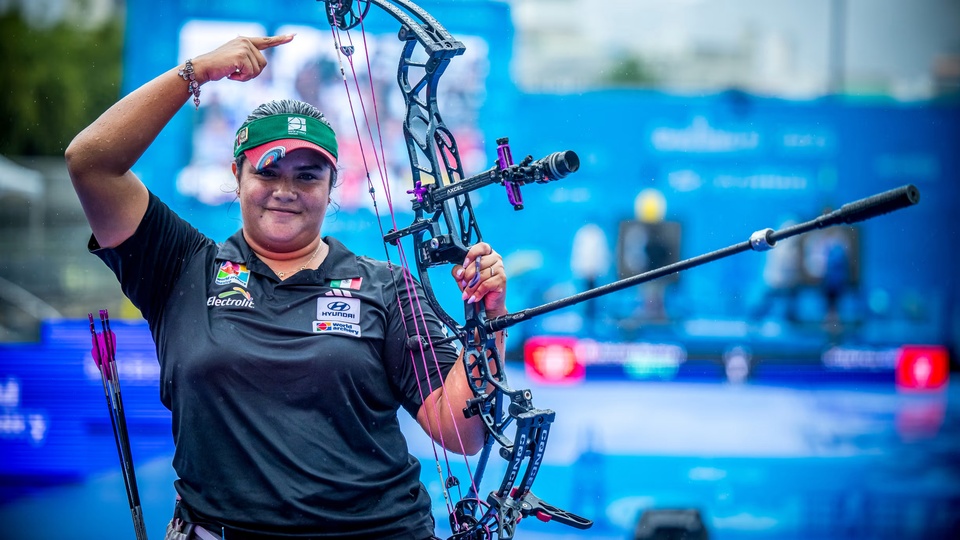
Compound archery is the most “mechanical” and configurable discipline in modern archery: its pulley or cam system reduces the holding weight at full draw, allows a sight with lens and level, the use of a mechanical release aid and an extremely fine setup.
Summary
In the current context, the main regulatory reference remains the World Archery Rulebook 2026, especially Book 3 for equipment and Book 2 for rounds, categories and competition format. In Spain, RFETA generally adopts WA regulations, but makes it clear that, if there is a contradiction or a national competition introduces particularities, the circulars, the regulations and RFETA Regulation 2201 prevail in that order.
Technically, a good competition compound bow is not defined only by “speed”, but by its ability to repeat the shot: suitable axle-to-axle length, brace height consistent with the use, cam synchronisation, centre shot, nocking point, peep and rest properly adjusted, an arrow with the correct spine and an execution that does not break alignment during the release. Recent technical literature reinforces this idea: in compound archery, postural stability before release has particular weight in performance, and specific scapular strengthening programmes —for example, focused on the lower trapezius— can improve both control and score.
In competition, the standard outdoor compound discipline still revolves around 50 m, 72 arrows, an 80 cm six-zone target face and elimination matches by cumulative score; indoors, the reference is 18 m, 60 arrows, with the use of a 40 cm vertical triple face for compound in most WA and RFETA categories, except for national particularities such as RFETA U15, which in the August 2025 table appears with a full 40 cm face in the indoor qualification round. For 2026, it is also worth bearing in mind a historic change: compound archery has already had its Olympic entry at LA28 confirmed through the mixed team event, so the international landscape is evolving quickly.
World Archery and RFETA regulatory framework
The regulatory basis of compound archery in 2026 is divided, above all, between WA Book 3 for equipment and Book 2 for the sporting format. In Spain, RFETA Regulation 2201 also establishes the “regulatory rank”: first the circulars for each event, then RFETA regulations, and then WA and RFETA regulations; it also expressly states that, in aspects where WA and RFETA do not coincide in national events, RFETA regulations will be above. This is key to avoid preparing equipment that is “legal under WA” and then discovering that a specific national circular introduces additional requirements for participation, uniformity or categories.
The following table summarises the most useful rules for quick reference for a compound archer or coach:
| Rule | Article or point | What it regulates | Practical effect |
|---|---|---|---|
| World Archery Book 3 | 9.2.1 | The compound bow may be shoot-through; the peak weight may not exceed 60 lb. | Limits the maximum legal competition power and validates modern target designs. |
| World Archery Book 3 | 9.2.2 | The string may include a peep, nose mark, kisser, D-loop, weights and silencers. | Legalises the typical architecture of a target compound bow. |
| World Archery Book 3 | 9.2.3 | The pressure point of the rest may not be located more than 6 cm behind the pivot point of the grip. | Limits extreme rests and overdraws. |
| World Archery Book 3 | 9.2.4 | Any number of stabilisers is allowed as long as they do not touch the body or disturb others. | Allows long target configurations with V-bars and weights. |
| World Archery Book 3 | 9.2.6 | The sight may include a magnifying lens, prism and level; nothing electric/electronic. | The compound bow may use a scope with magnification and bubble level. |
| World Archery Book 3 | 9.2.7 | A mechanical release aid is permitted if it is not permanently attached to the bow. | Validates hinge, thumb, index or resistance release. |
| World Archery Book 3 | 9.1.7 | Arrows: maximum shaft diameter 9.3 mm, point 9.4 mm, all identical per end, lighted nocks prohibited. | Affects the choice of shafts, wraps, points and pre-competition equipment control. |
| World Archery Book 2 | 4.5.1.1 | Target compound qualification round: 50 m and 72 arrows; U15 at 40 m. | Defines the basis of the international outdoor round. |
| World Archery Book 2 | 4.5.1.2 | Compound matchplay: 15 arrows individual, 16 mixed, 24 teams, in cumulative score. | Marks strategy for rhythm and error management. |
| RFETA Regulation 2201 | 1.1 | RFETA regulatory hierarchy and national prevalence in case of conflict. | Circulars may change the operational details of the event. |
| RFETA Regulation 2201 | 1.3.2, 1.3.3, 1.3.4 | Classes, divisions and categories. | Defines U15, U18, U21, senior, 50+, WA divisions and RFETA divisions. |
| RFETA Regulation 2201 | 1.4.1 | Minimum of 3 entries to call a category. | May cause category changes or cancellations. |
| RFETA Regulation 2201 | 1.6 | Uniformity and footwear. | Prohibits camouflage and denim; requires the bib number to be visible and footwear to cover the foot. |
| RFETA Annex I | August 2025 | Distances and target faces by category. | It is the practical table for preparing indoor and outdoor in Spain. |
Regarding categories, World Archery recognises in target archery compound the classes women, men, U21, 50+, U18 and U15, while RFETA structures national competition into U15, U18, U21, senior and veteran 50+, and also includes an absolute category when age categories are not called. RFETA also recognises WA divisions such as Compound and Open Compound, and adds national divisions in the field of disability and Arco & Salud.
In Spanish practice, the RFETA table of August 2025 sets for compound outdoor: 40 m/72 arrows/80 cm reduced face in U15, and 50 m/72 arrows/80 cm reduced face in U18, U21, senior and 50+; in indoor, it sets 18 m/60 arrows, with a full 40 cm face for U15 and a compound vertical triple face for U18 onwards. In WA formats, compound elimination rounds are shot by cumulative points, and finals are shot alternately.
There is one final important regulatory nuance: not everything is “closed” in the main article. Book 3 itself refers to official interpretations on matters such as anti-torque hand piece, touching bow, adjustable aperture peep sight, compound sight or use of thumb. RFETA also publishes an index of WA interpretations and recalls that those interpretations are mandatory in the cases for which they were issued. When the text of the regulation seems short or ambiguous, it is worth thinking like a judge: the combination “article + interpretation + event circular” is the real reference.
Equipment, components and types of compound bow
In very broad terms, two functional families coexist today. On the one hand, target compound bows, longer axle-to-axle and designed for stability and repeatability; on the other, more compact and faster compound bows, aimed at hunting or multipurpose use. A clear example of a current target bow is the Mathews TITLE, offered in 34" and 36" ATA, with a 6.5" brace height and 70, 75 and 80% let-off options; on the other side, manufacturers such as Hoyt are pushing fast tuning systems and more portable platforms in their not strictly target lines. For a technical blog about competition, it is worth underlining that the target compound sacrifices part of that “short and fast bow feeling” in exchange for a more stable platform, more tolerant of torque and easier to balance with long stabilisation.
As visual support for editorial layout, these images illustrate general anatomy, cam/let-off operation, timing and the draw force curve. For final publication, the ideal option is to replace them with your own graphic or with images used with explicit permission from the corresponding manufacturer or media outlet.
Recommended image: anatomy of the compound bow, cams/let-off, timing and draw force curve.
In addition to those images, World Archery’s official Compound page includes annotated images of compound bow, cam, D-loop, sight, rest/cable guard, stabilisation and release aid, and Hoyt’s 2026 whitepaper contains an XTS Paper Tuning Guide with visual examples of left/right/high/low tears. These are two very useful references to accompany a technical post without falling into generic graphics.
The following table summarises the components that really matter to the competition archer:
| Component | Main function | What should be monitored |
|---|---|---|
| Body or riser | It is the structural base of the bow; it connects limbs, sight, rest and stabilisation. | Rigidity, grip geometry, balancing capacity. |
| Limbs | Store elastic energy. | Real power, symmetry and absence of cracks. |
| Cams or pulleys | Determine draw force curve, draw length and let-off. | Synchronisation, correct modules, solid wall. |
| String and cables | Transmit energy and hold peep, D-loop and marks. | Wear, twist, correct length and maintenance. |
| Peep and D-loop | Align eye-sight and connect to the release aid. | Height, peep rotation and anchor consistency. |
| Rest | Supports and guides the arrow during launch. | Centre shot, height, clearance and the 6 cm regulatory limit. |
| Sight and scope | Provide an aiming reference; in compound, lens and level are allowed. | Optical clarity, third axis, bubble level and legality. |
| Stabilisers | Improve balance, inertia and vibration damping. | Mass distribution and absence of contact with the body. |
| Arrows | They are the true projectile of the system. | Spine, length, weight, concentricity, vane clearance and WA limits. |
| Vanes and points | Correct flight and adjust front mass. | Vane profile, helical/offset, point weight and spine compatibility. |
To differentiate between competition equipment and recreational equipment, the boundary is not regulatory but functional. As a practical inference from WA and from the current offering of manufacturers, a competition setup usually prioritises: sight with scope and lens, bubble level, long stabilisation with weights, micro-adjustable rest, arrows matched by weight and spine, very fine peep and a documented setup; a recreational or club setup, on the other hand, should prioritise simple adjustability, moderate draw weight, forgiveness margin, lower maintenance complexity and contained costs. In competition, the aim is to squeeze out repeatability; recreationally, to maximise safety, ease of use and learning.
Adjustment, tuning and setup
The best way to explain tuning without turning the article into a maze is to separate factory settings, archer settings and flight micro-adjustments. The order matters a lot. Hoyt insists on verifying factory specifications —string/cables, cam orientation, draw length, draw weight, brace height and axle-to-axle— before tuning, and Easton recalls two principles worth their weight in gold: fit all the accessories with which you are going to compete and change one single variable at a time.
Let-off is one of the most characteristic variables of the compound. In current systems it may come in preset positions: for example, Hoyt’s SCTR allows approximately 65, 70 or 75%, and the Mathews TITLE is offered with 70, 75 or 80%. More let-off reduces holding weight and may facilitate the aiming phase, but it can also change the feeling of the wall, back tension management and shot rhythm; less let-off usually gives a more “alive” wall and requires more active execution. There is no universal “correct” figure: it depends on the archer’s technique, aiming duration and the overall stability of the setup.
Draw weight must be adjusted symmetrically top and bottom to keep the tiller even. Hoyt indicates that its bows can be reduced by approximately 10 lb from peak weight and warns that the limb bolts should not be backed out more than 8 turns; in addition, at maximum weight some models may draw up to 4 lb more than the labelled figure. Translated into the language of the coach: the useful power is not the catalogue one, but the one the archer can draw and hold without breaking technique.
In the centre shot, Hoyt recommends starting at around 13/16", or in an approximate range of 3/4" to 7/8", and in its target manual places the starting point between 5/8" and 1" from the Berger hole to the centre of the arrow. That figure is not the final tuning: it is only the reasonable starting point so that the rest does not become a compensator for problems that actually come from a poorly chosen arrow, incorrect cam timing or poor clearance.
The nocking point and the peep height must serve the archer’s body, not the other way around. Easton proposes, for compound with mechanical release aid, a starting point close to 1/4" above square; Hoyt, for its part, recommends avoiding clamp-on metal nocking points and leaving the installation of string components to a qualified archery shop. In practical terms, the objective is for the arrow to leave cleanly and for the eye, when reaching anchor, to find the peep naturally, without raising or lowering the head or collapsing the shoulder.
Cam timing is one of the points where the most performance is gained and the most problems are masked. Hoyt defines the optimal adjustment as the one in which the draw stops arrive at the same time at full draw and recommends using a draw board or other verification tools. If timing is not right, the archer may “save” groups for a while through compensations, but will pay in consistency, wall, bow reaction and shot quality under pressure.
As for methods, the strongest combination for a technical blog remains: verification of specifications, paper tune, clearance control, and then bare shaft or groups at short/long distance. Hoyt’s whitepaper begins XTS paper tuning with rest centred, correct nocking point, correct cam timing and clearance checked; Easton adds that paper tune works very well in compound with release and that, once a good hole is achieved at 4–6 feet, it is worth repeating a little farther back to confirm that the arrow was not simply “recovering” the oscillation.
The following table summarises the most relevant adjustments and their typical effect:
| Adjustment | Useful starting point | If it is wrong, it usually looks like this |
|---|---|---|
| Draw length | Must allow a solid wall and repeatable anchor without collapse or hyperextension. | Head searching for the peep, raised shoulder, forced release. |
| Draw weight | The maximum the archer can hold without degrading technique. | Excessive shaking, loss of alignment, rapid fatigue. |
| Let-off | According to technique and shot rhythm. | “Dead wall”, disconnection from back tension or excessive hold weight. |
| Center shot | Approximately 13/16" or within the range suggested by the manufacturer. | Lateral tears, need for strange rest or sight compensations. |
| Nocking point | In release aid, approx. 1/4" above square as a start. | High/low tears, “porpoising” flight. |
| Cam timing | Stops simultaneous at full draw. | Uneven wall, strange reaction, unstable tuning. |
| Peep | At eye height in natural anchor. | The archer moves the head to “search” for the image. |
| Arrow spine | Chosen by chart and confirmed in real tuning. | Inconsistent paper, poor groups, extreme bareshaft. |
- Verify factory specifications.
- Choose arrow by spine, length and weight.
- Adjust draw length, draw weight and let-off.
- Configure center shot, rest and nocking point.
- Install peep and confirm natural anchor.
- Check cam timing.
- Do paper tune.
- If the tear is clean, check clearance. If not, correct the big things first: spine, timing, nock, rest.
- Validate with groups or bare shaft.
- If everything repeats, document the final setup. If not, micro-adjust one single variable.
That workflow does not replace the manufacturer’s tune chart, but it does reflect the most robust order to avoid the classic mistake of “chasing the paper hole” without first having solved the compatibility between archer, bow and arrow.
Shooting technique, training and performance analysis
World Archery describes the compound shot in three phases: bringing the bow to the mechanical stop, aiming consciously with a magnified sight and executing the release with the release aid, also warning that conscious and abrupt activation of the release —the famous punching— may favour target panic. That official description fits quite well with modern teaching: compound punishes small aiming errors little, but punishes execution errors a lot.
Technique, therefore, must seek a repeatable posture, not a theatrically rigid posture. Evidence published in 2025 suggests that, in compound, postural stability prior to the release has a relevant relationship with accuracy; for that reason it makes sense to insist on stable feet, neutral pelvis, low shoulders, low-torque grip pressure and a sight picture that “floats little and always the same”. More than absolute immobility, what high-level compound seeks is a small and known oscillation pattern.
The grip should rest near the pivot point of the grip and avoid lateral torque; the anchor should make eye, peep and scope coincide automatically; the final alignment should take advantage of the bow wall and back work so that the release happens “through” the shot and not through a nervous contraction of the finger. In other words: in compound, almost all the equipment is designed to repeat geometry; if the archer rebuilds the gesture on every arrow, the best tuning in the world will only disguise the problem. This synthesis is consistent with the mechanics of the system —peep, D-loop, mechanical stop and magnified sight— described by WA.
In physical training, the current trend is less “generic gym” and more specific work on scapular control, posterior shoulder, trunk stability and lower-limb support. A 2022 study with a 12-week programme focused on the lower trapezius found an improvement in the simulation score from 628 to 639 points out of 720 in the exercise group, together with strength improvements and favourable changes in the upper/lower trapezius ratio. For a compound coach, the reading is clear: fine technique is better sustained when the shoulder girdle stops being the bottleneck.
Mental preparation can no longer be treated as an “extra”. The study by Lu and Zhong with data from 122 archers from Tokyo 2020 showed that a higher heart rate, used as a biomarker of stress, was associated with a worse score in competition at the highest level. In parallel, World Archery recalls that elite compound archers compete “close to perfection”, where a minimal deviation decides a match. This justifies including simple but constant routines for breathing, pre-shot pacing, keywords, pressure simulation and specific matchplay training.
It is also worth looking at performance with a data mindset. More than limiting oneself to the average score, in compound especially useful metrics are: percentage of 10 and X, vertical and horizontal dispersion, first impact after a long break, group stability in crosswind, consistency of the peep-scope image, and physiological response under stress. The appearance of integrated sensors such as Mathews Shot Sense, which records shot analytics in real time from the grip, confirms a clear trend: technical analysis is moving more and more from the coach’s intuition to the digital traceability of the gesture.
As a counterpoint, training must also protect the archer. A 2024 epidemiological study with 200 young archers from the European Youth Championship found a high prevalence of injury and persistent pain: 101 participants had pain lasting more than three months, 31% acknowledged using medication to manage that pain and the shoulder area appeared as one of the problematic zones, in a context where approximately 51% neglected lower-body work. The lesson is uncomfortable but useful: in archery it is not enough to “shoot more”; load, recovery and prevention must be programmed.
Maintenance, safety, trends and references
In compound, maintenance is not cosmetic: it is safety. Hoyt’s target manual recalls that the bow is a mechanical device subject to wear, recommends inspection before each use, professional servicing at least once a year, and warns against dry fire, the use of damaged strings/cables, the use of unapproved presses and excessive loosening of limb bolts. It also sets very specific references: waxing string and cables regularly —Hoyt suggests every two weeks under intensive use—, replacing them when there is obvious wear or every two years in normal use, and even earlier if the manufacturer so indicates; in the same manual appears the replacement recommendation after 2,000 shots or two years, which should be interpreted as the manufacturer’s safety guide, not as a universal rule for all brands.
There are also two technical alerts that deserve to be very visible in a blog: the arrow must be correct for the bow and must not weigh less than 5 grains per pound of peak weight; and a damaged arrow is not discussed, it is discarded. Easton also insists on not shooting damaged arrows and on cutting carbon only with suitable tools, because apparently small assembly errors have too often ended in shaft breakage and a serious scare on the line.
In Spain, the culture of safety has additional regulatory support. RFETA requires installation safety reports issued by National Safety Judges and Regulation 2201 requires a positive report for homologations; in addition, the competition regulations themselves indicate that a competition cannot begin without that documentary safety requirement. For clubs and organisers this matters directly; for the archer, it translates into a simple idea: if the field is not properly homologated and reviewed, the problem is not only administrative, it is materially sporting.
In trends, compound is experiencing three very clear movements. The first is press-free micro-tuning: Hoyt promotes its XTS Tuning System as a fast, precise system with no need for a press, also capable of correcting high and low tears; Mathews, for its part, promotes Limb Shift Technology as a press-free micro-adjustment of the limb channel. The second is shot instrumentation, with examples such as Shot Sense. The third is the consolidation of target platforms optimised for stability and repeatability, not only for speed, as illustrated by the TITLE range.
To close the article with genuinely useful resources in Spanish, the best selection is not very “romantic”, but it is very practical. First, RFETA Regulation 2201 and the Age, distances and target faces chart; second, the RFETA Index of WA Interpretations, tremendously useful when an equipment rule seems clear until a borderline case appears; and third, the RFETA Guide to shooting field installations to understand how safety is brought down to the ground. As a technical complement, although often in English, it is worth keeping close at hand the manuals and tune charts of the bow manufacturer and an arrow guide such as Easton’s.
Open questions and limitations
The first practical limitation is that RFETA may operationally modify an event through a circular, and its own regulations give it priority over the general rule; therefore, to compete it is not enough to “know WA”, you must read the specific call.
The second is that some equipment matters require judicial interpretation more than a literal reading of the article. RFETA expressly recognises this in its index of WA interpretations, and WA Book 3 itself refers again and again to interpretations linked to peep, sight, touching bow, use of the thumb or specific accessories.
The third is temporal: World Archery’s public documentation is not always updated at the same speed. In 2026, official news and the LA28 qualification pathway already confirm the Olympic debut of the compound mixed team, while some explanatory equipment pages still carry earlier wording. For matters of Olympic eligibility and major-event format, it is advisable to give priority to recent official news and the current rulebook.
The fourth is technical: parameters such as brace height, ATA, real let-off, optimal center shot or timing marks depend on the specific model of the bow. This article serves as an expert and updated map, but the final setup must always be closed with the manufacturer’s tune chart, bench verification and validation with the real archer who is going to shoot.