

 EN
EN
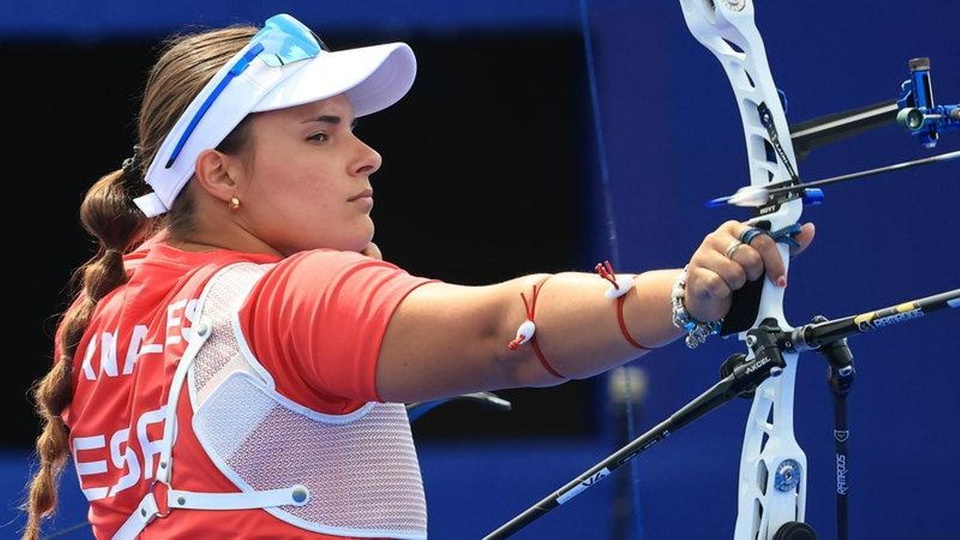
Olympic recurve archery is a sport of maximum precision, regulated by strict specifications from World Archery and the IOC. Archers shoot from 70 meters aiming at targets 122 cm in diameter (the inner 10-ring scores 10 points and measures 12.2 cm). An Olympic tournament combines a ranking round of 72 arrows (individual) and elimination phases with few arrows, following the set system (up to 6 set points). Equipment (bow length, arrows, stabilizers, sights, clicker, etc.) and technique decisively influence accuracy; in fact, biomechanical studies indicate that deviations of only 1–2° in the shoulder can shift impact by 15–20 cm at 70 m, while elite athletes maintain angular vibrations of ~0.5° under full effort (compared to 3.5° in novices). This article analyzes regulations, technical specifications, competition formats, performance metrics, shooting biomechanics, bow tuning, error correction, training planning, and even injury prevention, with references to official sources (World Archery, IOC) and recent studies in biomechanics and performance.
Specifications and Regulations (World Archery / IOC)
World Archery defines Olympic (recurve) archery with standard parameters: shooting is done at 70 m on targets 122 cm in diameter (10-ring of 12.2 cm). The ranking round consists of 72 arrows (per gender), which determines positions from 1 to 64 in individual events. The recurve bow must pass through a 122 mm (12.2 cm) ring without non-permitted accessories, and typically measures between 66 and 70 inches in length. Arrows have a maximum shaft diameter of 9.3 mm (point included 9.4 mm). Electronic aiming devices are not allowed, although weights (short rods) may be added to the bow for stabilization. Archers use finger tabs, arm guards, and regulation clothing; for safety, clear labeling of arrows and properly checked equipment is required.
Competition Format and Scoring
Olympic competitions combine a ranking round and bracket eliminations. In the ranking round, each archer shoots 72 arrows (three arrows per end of six arrows) for a maximum of 720 points. Individual matchups follow a simple bracket: 1st vs 64th, 2nd vs 63rd, etc., with direct elimination. Individual matches use the set system: each set consists of 3 arrows per archer (max. 30 points); the set winner receives 2 set points, a tie gives 1 point each. The first to reach 6 points (max. 5 sets) wins; if tied 5–5 after 5 sets, a shoot-off arrow decides (closest to center wins). Team events (3 archers) and mixed events (1M+1F) use sets of 6 or 4 arrows respectively (two arrows per archer in team sets, 4 total in mixed), played to the best of 4 sets (first to 5 set points). In case of team ties, a shoot-off arrow per archer is used (and additional arrows if the tie persists).
Table: Formats and Scoring
| Category | Ranking (72 arrows) | Eliminations | Arrows/set | Sets to (Pts) |
|---|---|---|---|---|
| Individual | 70 m, 122 cm, 72 arrows | Head-to-head (1–64) | 3 | 5 sets (6 pts) |
| Team (3) | 3 archers 70m (combined) | Elimination brackets | 6 (2 each) | 4 sets (5 pts) |
| Mixed (2) | 1M+1F combined 70m, 72 arrows | Elimination brackets | 4 (2+2) | 4 sets (5 pts) |
Performance Statistics and Records
Elite archers achieve very high scores. The world record for the ranking round (72 arrows at 70 m) in the men’s category is 702 points, achieved by Brady Ellison in 2019. The previous record was 699 (Im Dong Hyun, 2012), and the first 700 was recorded in 2016 (Woojin, Rio). In the women’s category, Lim Si-hyeon set a world record of 694 points in Tokyo 2021, surpassing the previous 692 (Kang Chae-young, 2020). Typical qualifying scores range between 660–680, but Olympic medals are usually decided in set rounds with totals between 28–30 per set. In practice, champions can score 29–30 in each set; a perfect set (9-10-10) is common at the top level.
In mixed/team elimination matches, perfect sets of 29–30 points have been observed (e.g., 30/30/30 in official competitions). Consistency is key: variations as small as 1–2% in posture or force can translate into differences of centimeters in impact location.
Shooting Biomechanics: Posture, Anchor, Release and Follow-through
Shooting technique is extensively analyzed biomechanically. The initial stance is usually parallel to the shooting line, with feet shoulder-width apart and weight centered. The torso remains upright and shoulders aligned; leg and core strength contribute to stability.
Fig. 1 – Base posture: feet parallel, shoulder-width stance, torso aligned with the target.
A stable posture (feet at shoulder width) is essential to control body sway and reproduce the shot consistently.
When raising the bow, the archer draws the string to a fixed anchor position: typically, the edge of the drawing hand (or tab) touches the chin or corner of the mouth, with the string firmly contacting the nose or lip (“point on face”). A consistent anchor ensures repeatable line of sight and muscle tension. During full draw, back muscles (rhomboids, lower trapezius, deltoids) maintain alignment and distribute load. Elite athletes keep joint oscillations below 0.5° during full draw, while novices may reach 3–4°. Even a slight misalignment (e.g., 5 mm displacement of the drawing arm) can alter launch angle by several degrees and affect vertical impact.
Fig. 2 – Stable anchor: the drawing hand is firmly placed on the face (chin and nose) at full draw.
The alignment of the bow arm and draw length must be identical in every shot. Torso expansion (pushing with the bow arm while pulling with the other) creates sustained tension until release. The release must be smooth and natural: avoid “plucking” or pinching the string. High-speed camera studies show that abrupt finger separation increases lateral arrow oscillation by ~15% and reduces useful energy. Elite archers execute a clean release with linear follow-through: the drawing hand moves straight backward and the bow arm moves forward toward the target. Maintaining gaze and posture after release is crucial; premature movement of the head or body disrupts shot stability. Research agrees that a relaxed grip and proper follow-through improve accuracy.
Equipment Setup and Tuning
The bow and arrows must be finely tuned. Brace height (distance between string and grip) is adjusted within manufacturer-recommended ranges, typically 21–23 cm for 68″ bows. A lower brace height produces faster arrows but increases noise and vibration; too high makes the bow feel harsh. The optimal brace height yields stable flight, tight grouping, and quiet shooting.
Tiller (difference between string-to-limb distances) is typically adjusted to around 5–10 mm (lower limb slightly farther from the string), balancing power differences. Adjustments are made through limb bolts, affecting limb pressure and brace height. Incorrect tiller or brace height can cause poor grouping or vibration.
Arrow points, shafts, and fletching must match the rest; rules allow any standard arrow that does not damage the target, with a maximum shaft diameter of 9.3 mm. Carbon or aluminum shafts that are too thin may break; too thick increases weight and drag. Total arrow weight must suit bow power (at least ~1.5 times bow poundage), although WA does not set a strict limit.
Table: Equipment Specifications
| Component | Parameter | Range/Typical | Notes |
|---|---|---|---|
| Recurve bow | Total length | 66″–70″ (168–178 cm) | Depends on archer; riser passes 12.2 cm. |
| Brace height | ~21–23 cm | Check manufacturer manual. | |
| Tiller | 5–10 mm | Lower limb farther (positive). | |
| Stabilizers | Max 100 cm | With end weight. | |
| Arrows | Shaft diameter | ≤9.3 mm | Point ≤9.4 mm. |
| Target | Total diameter | 122 cm | Concentric rings (10–1). |
| 10-ring diameter | 12.2 cm | Like an apple. | |
| Format | Distance / arrows | 70 m / 72 | Ranking round. |
Common Errors and Correction Drills
Coaches identify frequent errors: excessive grip (torque), unstable posture, inconsistent anchor, flinch or anticipation, and lack of follow-through. Beginners often grip too tightly or twist the wrist, introducing variability, or look at the arrow impact prematurely. Others release abruptly (“pluck”), causing tension and scattered arrows.
To correct these issues, specific drills are used: matchplay simulations, “focus compass” exercises, resistance band training, clicker drills (“click and pull”), pyramid sets (6,9,12,15,12,9,6,3 arrows), blank bale shooting, and assisted bow holding drills. A simple rhythm drill (“7:14”) trains timing under Olympic conditions. These drills improve consistency and help identify specific errors.
Training Periodization and Mental Strategies
| Date | Section | Activity | Description |
|---|---|---|---|
| 1 | Adaptation | Technique | Stance and anchor |
| 2 | Endurance | Volume | 72 arrows (draws, match simulation) |
| 3 | Strength | Physical training | Legs and core |
| 4 | Simulation | Matchplay | Competition sets |
| 5 | Rest | Recovery | Active rest and stretching |
| 6 | Fine technique | Specific drills | Blank bale, click pull |
| 7 | Mental | Visualization | Focus and concentration |
Each microcycle balances volume and intensity, combining technical days, physical training, and competition simulations to peak for key events.
Mental preparation is critical: visualization, breathing routines, and target panic control are widely used. Elite archers also practice meditation and cognitive training to improve focus and resilience.
Injury Prevention
Although relatively safe, archery carries overuse injury risks, mainly in the drawing shoulder (≈65%) and bow arm (23.5%). Common injuries include rotator cuff tendinitis, subacromial syndrome, and “archer’s elbow.” Prevention relies on proper technique, warm-up, strengthening stabilizers, using proper equipment, rest, and flexibility work.
Early detection of pain is essential; most injuries improve with technical correction and strengthening.
Conclusion
Olympic recurve archery combines technical precision, equipment tuning, and intelligent training. Mastering rules, biomechanics, and setup, along with structured training and mental strategies, is key to performance. Records of 702 (men) and 694 (women) reflect the sport’s demands. Proper technique and injury prevention ensure long-term success. This guide provides a complete analysis for intermediate and advanced archers seeking to optimize performance.