


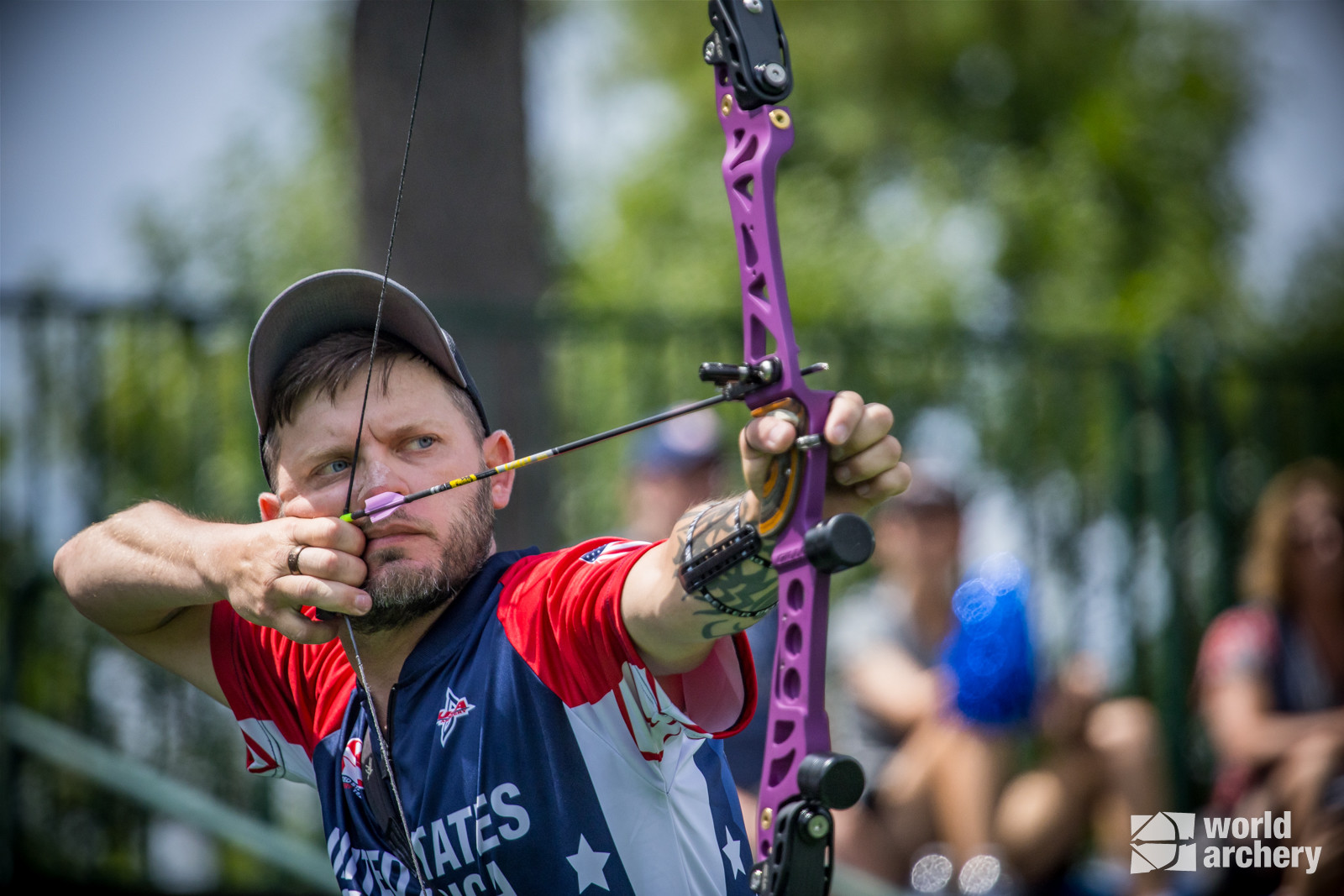
Barebow has become one of the most technical disciplines in modern archery. While it may look simpler at first glance, it actually requires full control over technique, equipment, and consistency.
In this guide, you will learn how barebow really works, what the official rules say, and how to improve your accuracy step by step.
What is Barebow?
Barebow is a recurve archery discipline regulated by World Archery, where archers shoot without a sight or aiming aids.
- No sight
- No clicker
- No long stabilizers
- Stringwalking is allowed
- Marked tab is allowed
Important: Marks on the string for aiming are not allowed.
Stringwalking: How It Really Works
Stringwalking is the main aiming system in modern barebow.
It consists of changing finger position on the string to adjust arrow trajectory:
- Lower fingers → arrow hits higher
- Higher fingers → arrow hits lower
What is allowed
- Changing finger position
- Using tab references
- Memorizing crawl positions
What is NOT allowed
- Marks on the string for aiming
- Aiming devices
Barebow Technique
1. Stance and Alignment
A solid foundation is essential for consistency.
- Stable foot positioning
- Balanced center of gravity
- Low shoulders
- Straight shoulder–elbow–arrow line
2. Back Tension
The shot must be driven by back muscles, not the arm.
- Scapula engagement
- Continuous expansion
- Elbow aligned with the arrow
3. Anchor
The anchor must be repeatable and consistent.
- Finger at mouth corner
- Clear facial reference
- Consistent alignment
Aiming Methods
Point-on
The most commonly used method in competition.
Gap shooting
Based on visual gaps between arrow and target.
Instinctive
Less common in modern competitive barebow.
Equipment Tuning
Tiller
Usually close to zero, depending on stringwalking style.
Nocking Point
Typically higher than Olympic setups (8–15 mm).
Arrows
Spine depends on multiple factors:
- Bow weight
- Arrow length
- Point weight
- Stringwalking usage
Button
Controls lateral arrow movement and is critical in barebow.
Riser Weights
- Improve stability
- Reduce vibration
- Adjust balance
Shot Physics
Archer’s Paradox
The arrow oscillates before stabilizing.
Stringwalking Effects
- Changes dynamic tiller
- Alters limb load
- Affects arrow launch
Trajectory
The arrow follows a parabolic path, requiring crawl adjustments.
Common Mistakes
Collapse
Causes low impacts due to loss of tension.
Inconsistent Crawl
Leads to vertical grouping issues.
Torque
Causes horizontal deviation.
Poor Alignment
Results in wide groups.
Barebow Training
Blank Bale
Short distance shooting without aiming.
Crawl Chart
Essential for consistent aiming.
Distance Training
Practice multiple crawls and distances.
Mental Training
- Shooting routine
- Breathing control
- Visualization
Barebow Competition
- No sight
- Stringwalking allowed
- Marked tab allowed
- Equipment size restrictions
Typical distances:
- 18 meters (indoor)
- 50 meters (outdoor)
FAQ
Can you mark the string in barebow?
No, string markings for aiming are not allowed.
What is stringwalking?
An aiming technique based on finger placement on the string.
Is barebow difficult?
It requires high consistency but is very rewarding.
Conclusion
Barebow is a discipline where every detail matters. Without a sight, accuracy depends entirely on technique, tuning, and repetition.
If you want to truly understand archery, barebow is one of the best ways to do it.